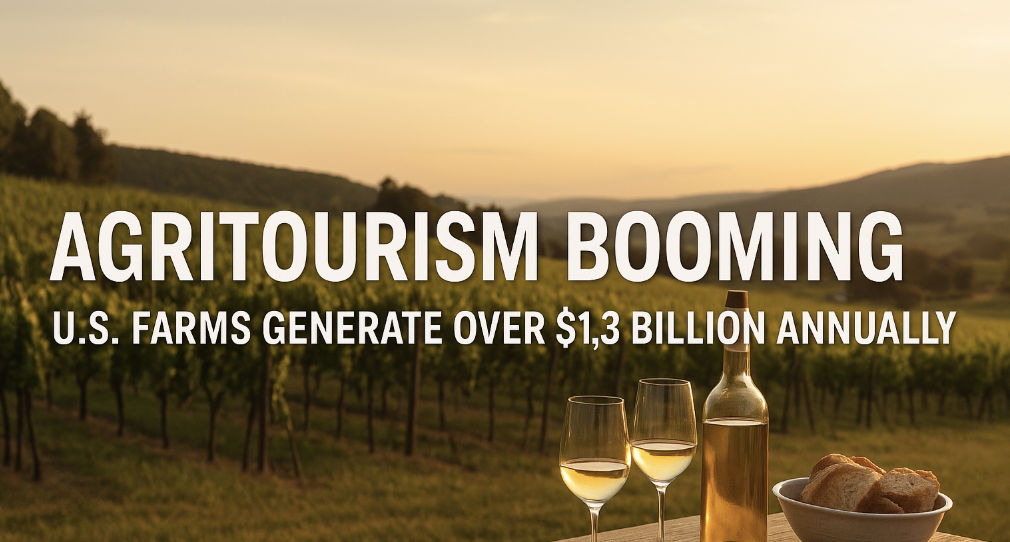
The Agritourism Boom: Transforming Land and Ranch Markets

Dated: February 18 2026

Views: 346


In recent years, agritourism has emerged as a powerful force in rural economies, bridging traditional agriculture with experiential travel. By inviting visitors onto working farms, ranches, vineyards, and orchards, producers diversify revenue streams while offering authentic, educational encounters with food production and the countryside.This article examines the sector's growth, its influence on land and ranch valuations, key drivers of demand, successful models, challenges, and strategic considerations for landowners and investors.Defining Agritourism and Its Core ElementsAgritourism encompasses visitor activities conducted on active agricultural properties for recreation, education, or direct sales. These may include farm stays, guided tours, workshops, u-pick operations, tastings, or on-site dining—all while preserving the primary function of farming or ranching.The emphasis remains on authenticity: guests engage with real production processes, fostering a direct connection between consumers and the origins of their food and natural resources.Key Activities Driving Visitor EngagementTypical experiences range from seasonal fruit or vegetable harvesting and animal interactions to educational sessions on sustainable practices, viticulture, or beekeeping. Ranches often feature horseback riding, herding demonstrations, or nature-based wellness programs, while vineyards and breweries incorporate tastings and tours tied to on-site cultivation.Such offerings appeal across demographics, combining leisure with meaningful learning and frequently encouraging repeat visitation through positive, shareable experiences.Current Market Growth and Projections as of 2026The agritourism industry continues its upward trajectory, bolstered by shifting consumer preferences and the need for agricultural diversification.Global and U.S. Market Size and TrendsEstimates place the global agritourism market at approximately USD 81.2 billion in 2025, with forecasts projecting expansion to USD 209.3 billion by 2034 at a compound annual growth rate (CAGR) of 10.76%. In the United States, the sector generated around USD 3.28 billion in 2025 and is anticipated to reach USD 6.90 billion by 2032, reflecting CAGRs in the 11% range in various analyses.Growth is particularly pronounced in regions proximate to metropolitan areas, where demand for accessible rural getaways remains elevated.Factors Contributing to the Rise in DemandMultiple trends have converged to propel agritourism forward.Post-Pandemic Shift Toward Authentic ExperiencesThe pandemic accelerated preferences for open-air, lower-density travel. Agritourism meets this demand by providing uncrowded, nature-immersed activities centered on genuine agricultural engagement.Appeal to Families and Sustainability-Conscious TravelersEducational value attracts families, offering children practical insights into food systems, ecology, and responsible land use. Eco-focused consumers gravitate toward operations employing regenerative agriculture, organic methods, or conservation initiatives, aligning expenditures with environmental values.Influence on Land and Property ValuationsAgritourism potential markedly elevates rural property appeal and market value.Premium Pricing for Agritourism-Enabled PropertiesLand equipped with visitor infrastructure—trails, accommodations, tasting facilities, or event venues—often realizes higher sale prices due to income diversification. Buyers perceive these as resilient assets less vulnerable to commodity price volatility.Evidence from Regional MarketsUSDA data indicates U.S. farm real estate averaged $4,350 per acre in 2025, up 4.3% from the prior year (with inflation-adjusted growth of 1.9%). Cropland reached $5,830 per acre and pastureland $1,920 per acre. In regions like California's Placer County, integrated agritourism operations contribute to above-average appreciation.Evolution of Ranch Markets in the Modern EraRanching operations increasingly adopt hybrid models to enhance financial stability.Integrating Tourism with Traditional OperationsCore livestock and crop activities persist, augmented by tourism revenue that buffers against market fluctuations in agriculture.Notable Examples of Successful ImplementationsCalifornia's Placer County foothills provide compelling illustrations:Hillenbrand Farmhaus Brewery in Newcastle utilizes 13 acres to grow hops, fruit, and honey, producing farm-to-bottle beers. The site offers patio views of hop fields, haystacks, and roaming livestock (donkeys, horses, goats), paired with hand-crafted food in a relaxed, scenic setting.Goat House Brewing in Lincoln emphasizes on-site hop cultivation alongside craft beers and animal interactions. Visitors enjoy a rotating selection of brews while engaging with friendly goats, a donkey, and a highland cow in a casual, family-oriented taproom environment supported by food trucks and community events.Wise Villa Winery in Lincoln operates a 26-acre estate vineyard with Placer County's sole full-service Tuscan-style gourmet restaurant amid the vines. Guests partake in tours, tastings led by wine educators, and seasonal chef-prepared dishes (such as prime rib or multi-course pairings) in a sun-lit courtyard overlooking rolling hills and the Sacramento Valley—an elegant fusion of viticulture and hospitality.These operations showcase how localized agricultural strengths can evolve into sustainable, high-value destinations.Investment Perspective and Financial ReturnsAgritourism assets draw increasing investor interest for their balanced return profile.Analyzing Return on Investment for Agritourism VenturesEstablished ventures yield annual revenues from tens of thousands to over a million dollars, scale-dependent. Coupled with land appreciation (USDA 2025 average $4,350 per acre), these deliver cash flow alongside capital growth.Addressing Operational and Regulatory ChallengesEffective management demands proactive handling of constraints.Compliance, Liability, and Management ConsiderationsOperators require zoning clearances, licenses, health permits, and robust liability insurance. Coordinating visitor access with production schedules requires disciplined planning.Ensuring Long-Term Sustainability and Community ImpactBest practices involve capping attendance, managing waste, and collaborating with locals to mitigate concerns over traffic, taxes, or landscape changes.Guidance for Landowners Entering the SectorA methodical entry reduces risk.Essential Steps for Launching an Agritourism Enterprise
  1. Assess unique property attributes.
  2. Pilot modest activities to gauge interest.
  3. Engage regulatory authorities promptly.
  4. Implement safety measures and training.
  5. Set pricing informed by competitive analysis.
Effective Marketing StrategiesDigital platforms enable authentic storytelling through photos, videos, and testimonials. Partnerships with tourism entities and listings on experiential booking sites enhance reach.Future Outlook for Land and Ranch MarketsAgritourism is expected to maintain momentum into the late 2020s and beyond, supported by experiential travel trends, policy backing for rural vitality, and digital tools facilitating connections. Properties emphasizing authenticity and stewardship will secure competitive positioning.ConclusionAgritourism constitutes a strategic adaptation in rural land management, bolstering producer incomes, elevating property values, and strengthening agricultural communities. Through the thoughtful integration of production and hospitality, it meets contemporary demands for meaningful engagement with nature and food systems while promoting economic resilience.FAQs1. What constitutes agritourism under standard definitions?
Agritourism involves visitor participation in activities on operational agricultural properties—tours, lodging, workshops, or sales—where farming or ranching remains the foundational enterprise.
2. To what extent does agritourism affect property valuations?
Properties with developed visitor amenities commonly achieve 20–50% valuation premiums, attributable to revenue diversification and investor appeal for multi-use land.
3. What regulatory requirements typically apply to agritourism operations?
Obligations vary locally but generally encompass zoning verification, business registration, food-handling permits, and liability coverage.
4. Can smaller-scale properties succeed in agritourism?
Affirmative—numerous modest operations derive substantial supplementary income via focused, high-quality experiences, where execution and distinctiveness outweigh scale.
5. What is the projected trajectory for agritourism through the late 2020s?
Analyses forecast ongoing expansion, propelled by sustainable tourism preferences and rural economic imperatives, with robust growth anticipated through 2030 and further.
Blog author image

Alex Dyer

If you're in the market for a home, you can trust the experienced professionals at eXp Realty of California. We are dedicated to providing superior service and expertise to help you achieve your real ....

Latest Blog Posts

What the headlines mean for your next move

Short sales, South Placer market trends, mortgage rates, ranch property and three featured homes.ALEX DYER | REAL ESTATEPLACER & SACRAMENTO COUNTIES · SEPTEMBER 24, 2026This week's market

Read More

Sacramento Short Sales Are Rising in 2026 — Here’s What the Numbers Really Show

Sacramento Housing Market • Distressed Property ReportSacramento Short Sales Are Rising in 2026 — Here’s What the Numbers Really ShowShort sales are showing up again nationally and

Read More

Roseville, Rocklin & Lincoln Real Estate Market Report

Weekly Market Report · South Placer CountyRoseville, Rocklin & Lincoln Real Estate Market ReportWeek of September 17 – 23, 2026  ·  Prepared by Alex Dyer, Your

Read More

How Much Acreage Do You Need? Sizing Your Dream Ranch Property

Living in Placer CountySearch land and ranch listings Book a callLand & Ranch Guide, September 2026How Much Acreage Do You Need? Sizing Your Dream Ranch PropertyStart with the life you want, not

Read More