Short sales, South Placer market trends, mortgage rates, ranch property and three featured homes.ALEX DYER | REAL ESTATEPLACER & SACRAMENTO COUNTIES · SEPTEMBER 24, 2026This week's market

Dated: April 3 2023
Views: 53

California has a housing crisis, with a need to build 2.5 million homes by 2030, according to the state Department of Housing and Community Development, and a lack of progress toward addressing it as cities have consistently failed to meet the state's goals.
California has averaged building just 100,000 housing units per year. At this rate, we would only hit one-third of the target. Worse, the housing that does get built mostly serves higher-income households. Only 16% of California's construction is affordable for low-income households. At this pace, California wouldn't meet even 15% of its target of 1 million affordable homes.
Why are we failing?
California has missed every HCD target, often by a large margin. Existing approaches clearly aren't working, and this shortage will not fix itself.
One problem is that California has a labor shortage that is worsening as the skilled workers we need are themselves getting priced out of homes. Nationwide trends are no better due to structural challenges in the labor market.
What now?
To build more homes, we must turn to the four factors of production: labor, capital, land, and productivity. Labor supply is constrained, productivity will likely continue to lag, and land is scarce ⏤ prices have increased, and we want to use less, not more.
That leaves capital (the physical kind, not dollars). How do we apply capital to build more homes?
How about factories, which are the most proven way to apply capital to increase production?
Homes from factories?
The U.S. is building over 100,000 homes per year in factories and used to build 600,000-plus in the 1970s despite a smaller population and economy than today.
Modern manufactured homes can feature high-quality materials and are built to modern standards that exceed those of many current homes. This is particularly true in states like California, where the average home is 45 years old. And new homes help the planet as well: our Villa homes are Energy Star compliant and are built with better insulation than decades-old homes.
Manufactured housing is the most scaled form of factory-based prefabricated home building in the country and is administered by the U.S. Department of Housing and Urban Development. HUD regulations supersede local building codes, providing a uniform federal code that simplifies construction and allows manufacturers to do what they do best: produce at higher volumes and lower costs.
ADUs are a natural application for factory-built homes
Accessory dwelling units (ADUs), also known as "backyard homes," are one of the most straightforward applications of HUD regulations and an appealing way to increase housing supply and density. The Biden administration prominently featured HUD, manufactured housing and ADUs in their plan to address rising housing costs.
Any solution for making housing more affordable must reduce the cost of building a home. Factories can lower costs by as much as half through:
Even in this economy, ADUs are creating affordable housing
Housing affordability is at a record low as costs have been increasing everywhere. Land prices increased 76% from 2000 to 2016 nationwide, with prices more than doubling in the Bay Area and almost tripling in LA. Prices for materials increased, and labor shortages abounded. Local land use rules can result in added costs as well.
Despite this, affordable housing is being built in the form of ADUs. In California, laws enacted from 2017 to 2021 and later cleared the path for the construction of ADUs.
ADUs, and particularly factory-built ADUs, offer a unique opportunity to build housing at costs that haven't been possible for decades, thanks to savings across:
ADUs are powering the start of a prefab revolution in American homebuilding.
California's reforms have made the state a far more favorable place to build. While it has historically had a reputation as difficult, California has steadily chipped away at barriers.
Nowhere is this more obvious than with California ADUs, where statewide rezoning has created a huge opportunity to build. Cities are cluing in, with Monte Sereno looking to ADUs to meet all of its housing goals (Villa has already built two there and 200-plus throughout California). California ADUs, even those in the most exclusive suburbs, are affordable to households earning 20% less than the area median income. Put it all together, California ADUs are creating thousands of new, affordable homes, most of them at no cost to taxpayers.
Everyone from individual homeowners to billion-dollar public REITs and large-scale built-for-rent developers recognizes the opportunity to add more housing through prefab ADUs, by right and at low cost and high speeds, in some of the most desirable housing markets in America.
The bottom line
The combination of a massive housing shortage, a statewide rezoning for ADUs, and the application of prefab, factory-built housing is changing the game for housing in California and hopefully elsewhere soon.
Factory-built ADUs are a desperately needed solution to the housing crisis. It's time to build more homes in the places where people want to live.
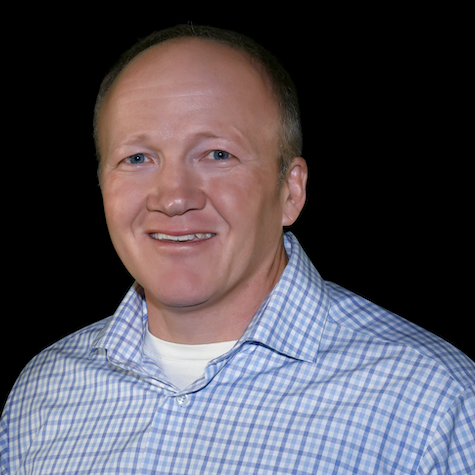
Ran Wei is the chief financial officer of Villa, a San Francisco-based prefab ADU builder.
If you're in the market for a home, you can trust the experienced professionals at eXp Realty of California. We are dedicated to providing superior service and expertise to help you achieve your real ....
Short sales, South Placer market trends, mortgage rates, ranch property and three featured homes.ALEX DYER | REAL ESTATEPLACER & SACRAMENTO COUNTIES · SEPTEMBER 24, 2026This week's market
Sacramento Housing Market • Distressed Property ReportSacramento Short Sales Are Rising in 2026 — Here’s What the Numbers Really ShowShort sales are showing up again nationally and
Weekly Market Report · South Placer CountyRoseville, Rocklin & Lincoln Real Estate Market ReportWeek of September 17 – 23, 2026 · Prepared by Alex Dyer, Your
Living in Placer CountySearch land and ranch listings Book a callLand & Ranch Guide, September 2026How Much Acreage Do You Need? Sizing Your Dream Ranch PropertyStart with the life you want, not
Additional:
915 Highland Pointe Dr. Ste 250Should you require assistance in navigating our website or searching for real estate, please contact our offices at 916-318-3487.
CA License # 01239383

 All measurements and all calculations of area are approximate. Information provided by Seller/Other sources, not verified by Broker. All interested persons should independently verify accuracy of information. Provided properties may or may not be listed by the office/agent presenting the information. Data maintained by MetroList© may not reflect all real estate activity in the market.
All real estate content on this site is subject to the Federal Fair Housing Act of 1968, as amended, which makes it illegal to advertise any preference, limitation or discrimination because of race, color, religion, sex, handicap, family status or national origin or an intention to make any such preference, limitation or discrimination.
MetroList CA data last updated: September 26, 2026 5:32 AM UTC Terms of Use.
Vendor data provided by Inside Real Estate, LLC.
All measurements and all calculations of area are approximate. Information provided by Seller/Other sources, not verified by Broker. All interested persons should independently verify accuracy of information. Provided properties may or may not be listed by the office/agent presenting the information. Data maintained by MetroList© may not reflect all real estate activity in the market.
All real estate content on this site is subject to the Federal Fair Housing Act of 1968, as amended, which makes it illegal to advertise any preference, limitation or discrimination because of race, color, religion, sex, handicap, family status or national origin or an intention to make any such preference, limitation or discrimination.
MetroList CA data last updated: September 26, 2026 5:32 AM UTC Terms of Use.
Vendor data provided by Inside Real Estate, LLC.
