Short sales, South Placer market trends, mortgage rates, ranch property and three featured homes.ALEX DYER | REAL ESTATEPLACER & SACRAMENTO COUNTIES · SEPTEMBER 24, 2026This week's market

Dated: May 30 2025
Views: 321
The U.S. Housing Market Shift: Why Sellers Outnumber Buyers in 2025
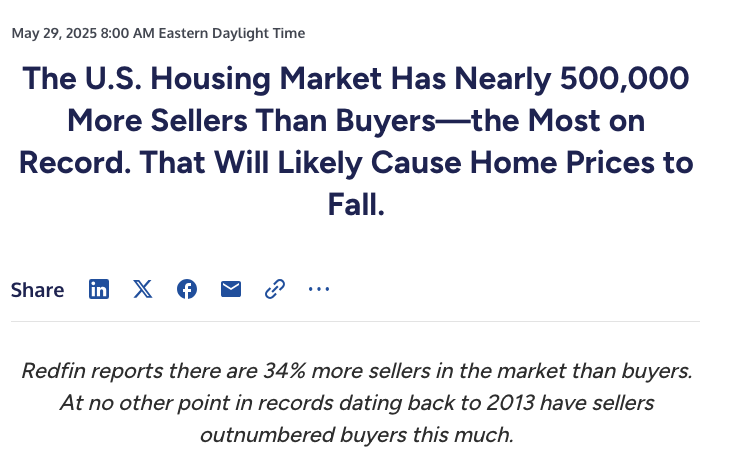
Imagine walking into a bustling marketplace where vendors are shouting about their wares, but the crowd of shoppers is thin. That’s the U.S. housing market in 2025—a place where sellers are outnumbering buyers by nearly half a million, according to a recent Redfin report. With 1.9 million homes up for grabs and only 1.5 million folks ready to buy, the scales have tipped in a way we haven’t seen before. Why is this happening? And what does it mean for you, whether you’re dreaming of a new home or trying to sell one? Let’s dive into this seismic shift and unpack what’s driving it, how it’s shaking up home prices, and what you can do to navigate this topsy-turvy market.
What’s Happening in the Housing Market Right Now?
The U.S. housing market is like a seesaw that’s suddenly tilted heavily to one side. Redfin’s latest data shows a 33.7% surplus of sellers over buyers—translating to 490,041 more people trying to sell than buy. This isn’t just a quirky stat; it’s a signal that the market is undergoing a transformation. For years, buyers scrambled to snag homes in a frenzy of bidding wars, but now? The tables have turned, and sellers are finding themselves in a crowded field, vying for fewer takers.
The Numbers Behind the Imbalance
Let’s break it down: 1.9 million sellers are listing their homes, while only 1.5 million buyers are actively shopping. That’s a gap of nearly half a million, and it’s not just a random blip. This imbalance is the widest on record, surpassing even the post-2018 period when mortgage rates spiked to 4.87%, flipping the market to favor sellers by 9.4%. Today’s gap is a whopping 33.7%, and it’s raising eyebrows across the real estate world.
Why This Is a Historic Shift
Why does this matter? Because it’s a rare moment when the housing market, often a seller’s playground, is starting to look like a buyer’s buffet. Historically, tight inventory and high demand kept prices soaring, but this surplus suggests a cooling-off period. It’s like the market is taking a deep breath after years of sprinting. This shift could ripple through the economy, affecting everything from home equity to consumer confidence.
Why Are Buyers Holding Back?
If you’re wondering why buyers are sitting on the sidelines, picture trying to climb a mountain with a backpack full of rocks. That’s what homebuying feels like for many in 2025. A mix of high prices, steep mortgage rates, and economic jitters is keeping wallets closed and dreams deferred.
Sky-High Home Prices
The median home sale price hit $431,931 in April 2025, a 1.6% jump from last year. Sure, that’s the slowest growth in nearly two years, but it’s still a hefty price tag for most. For first-time buyers, scraping together a down payment for a home that costs nearly half a million feels like chasing a mirage. Even though price growth is slowing, the sheer cost is enough to make anyone think twice.
Soaring Mortgage Rates
Then there’s the mortgage rate hurdle. Rates are hovering near 6.8%, pushing monthly payments to record highs. Imagine signing up for a mortgage payment that eats up half your paycheck—yikes! These rates, combined with high prices, mean affordability is at an all-time low. It’s no wonder buyers are hitting pause, waiting for a better deal or a drop in rates.
Economic Uncertainty
Add a dose of economic unease to the mix, and you’ve got a recipe for buyer hesitation. Talks of tariffs, layoffs (especially in tech-heavy cities), and policy changes under a new administration are making people nervous. A Redfin survey found that nearly 1 in 4 Americans is scrapping big purchases due to tariff fears. When the future feels shaky, buying a home can seem like a risky bet.
Sellers’ High Hopes and Price Cuts
On the flip side, sellers are acting like they’re still in the red-hot market of 2022. Many are listing their homes at “aspirational” prices, hoping to cash in on past gains. But here’s the catch: buyers aren’t biting, and that’s forcing sellers to rethink their strategy.
Aspirational Pricing Trends
Nearly 25% of listings on Zillow saw price cuts in April 2025, the highest share since 2018. Sellers are starting high, dreaming of big profits, only to slash prices when their homes sit unsold. It’s like putting a vintage car up for sale at a premium, then realizing the market prefers practical sedans. This trend shows a disconnect between seller expectations and buyer realities.
The Equity Advantage for Sellers
Why are sellers so bold? Many are sitting on a goldmine of home equity, thanks to years of rising prices. Homeowners who bought a decade ago have seen their property values soar, giving them financial cushion to list high or wait out the market. This equity gap creates a divide: sellers feel secure, while buyers struggle to get a foot in the door.
What Does This Mean for Home Prices?
With more sellers than buyers, you might be wondering: will home prices finally take a dive? The short answer is maybe, but it’s not a freefall.
Predictions for Price Declines
Experts at Redfin and Zillow are forecasting modest declines—about 1% for Redfin and 1.4% for Zillow by the end of 2025. If these predictions hold, it’d be the first annual price drop since 2023. Think of it like a balloon slowly losing air, not popping. These declines could ease affordability slightly, but don’t expect bargains everywhere.
Regional Variations
Not all markets are created equal. Tech-heavy cities like San Francisco, where nearly 500,000 tech workers have been laid off since 2022, are seeing sharper declines, especially in luxury homes. Meanwhile, more affordable metros like Detroit and Cleveland are holding steadier. Your location could determine whether you’re in a buyer’s paradise or a seller’s struggle.
How Buyers Can Navigate This Market
If you’re a buyer, this market might feel daunting, but it’s also an opportunity. With sellers outnumbering you, you’ve got leverage—use it!
Bargaining Power for Buyers
Buyers are gaining negotiating power, especially for entry-level homes around $500,000. In places like Denver, buyers are winning homes below list price with concessions thrown in. Don’t be afraid to make a lower offer or ask for repairs—it’s a buyer’s market in many ways.
Affordable Metro Areas
If your budget’s tight, consider metros where median prices are under $230,000, like Detroit, Cleveland, or Dayton, Ohio. These areas offer a lifeline for first-time buyers who want to own without breaking the bank. Sure, they might not be as flashy as coastal cities, but they’re a solid start.
What Sellers Need to Know
Sellers, you’re not out of luck, but you’ll need to play smart to stand out in this crowded market.
Pricing Strategically
Forget pie-in-the-sky pricing. Set a realistic list price based on recent sales in your area. A home priced right from the start is like a magnet for buyers, while an overpriced one gathers dust. Work with a realtor to find the sweet spot.
Enhancing Property Appeal
A little TLC goes a long way. Simple upgrades like fresh paint, modern fixtures, or a staged living room can make your home pop. Think of it like dressing up for a first date—you want to make a great impression fast.
The Bigger Picture: A Changing Market
This seller surplus isn’t just about real estate; it’s a snapshot of broader economic shifts.
Affordability Crisis
The gap between sellers and buyers underscores a deeper issue: housing affordability. With median monthly mortgage payments at record highs, many Americans are priced out. Renting is now cheaper than buying in every major U.S. metro, pushing nearly 40% of renters to believe they’ll never own. It’s like the American Dream is stuck in a traffic jam.
Renting vs. Buying
Why is renting winning? Because high mortgage rates and home prices make monthly payments brutal. For many, renting offers flexibility and lower costs, especially in uncertain times. It’s a practical choice, but it stings for those who see homeownership as a milestone.
Long-Term Market Outlook
Looking ahead, the market could stabilize if mortgage rates ease or inventory tightens. But if economic uncertainty persists, we might see more buyers sidelined. The housing market is like a river—always moving, sometimes turbulent, but eventually finding its course.
Conclusion
The U.S. housing market in 2025 is at a crossroads, with nearly 500,000 more sellers than buyers creating a rare opportunity for some and a challenge for others. Buyers can leverage their newfound power to negotiate deals, while sellers need to price smartly to attract attention. Behind the numbers lies a story of affordability struggles, economic uncertainty, and shifting dreams. Whether you’re buying, selling, or just watching, staying informed is key. Keep an eye on rates, prices, and local trends—they’ll shape what comes next in this ever-changing market.
FAQs
1. Why are there so many more sellers than buyers in 2025?
The surplus stems from high home prices ($431,931 median), elevated mortgage rates near 6.8%, and economic concerns like tariffs and layoffs. Buyers are hesitant, while sellers, buoyed by home equity, are listing in droves.
2. Will home prices drop significantly due to this imbalance?
Experts predict modest declines—1% to 1.4% by year-end 2025. While this could ease affordability, don’t expect a crash. Regional factors, like tech layoffs, may cause bigger drops in some areas.
3. How can buyers take advantage of this market?
Buyers have more negotiating power, especially for homes around $500,000. Make lower offers, ask for concessions, or explore affordable metros like Detroit or Cleveland.
4. What should sellers do to sell faster?
Price realistically based on local comps and boost curb appeal with small upgrades like fresh paint or staging. Overpricing can lead to longer listing times.
5. Is renting a better option than buying right now?
In many U.S. metros, renting is cheaper than buying due to high mortgage payments. If affordability is a concern, renting offers flexibility, but long-term homeownership may still build wealth.

If you're in the market for a home, you can trust the experienced professionals at eXp Realty of California. We are dedicated to providing superior service and expertise to help you achieve your real ....
Short sales, South Placer market trends, mortgage rates, ranch property and three featured homes.ALEX DYER | REAL ESTATEPLACER & SACRAMENTO COUNTIES · SEPTEMBER 24, 2026This week's market
Sacramento Housing Market • Distressed Property ReportSacramento Short Sales Are Rising in 2026 — Here’s What the Numbers Really ShowShort sales are showing up again nationally and
Weekly Market Report · South Placer CountyRoseville, Rocklin & Lincoln Real Estate Market ReportWeek of September 17 – 23, 2026 · Prepared by Alex Dyer, Your
Living in Placer CountySearch land and ranch listings Book a callLand & Ranch Guide, September 2026How Much Acreage Do You Need? Sizing Your Dream Ranch PropertyStart with the life you want, not
Additional:
915 Highland Pointe Dr. Ste 250Should you require assistance in navigating our website or searching for real estate, please contact our offices at 916-318-3487.
CA License # 01239383

 All measurements and all calculations of area are approximate. Information provided by Seller/Other sources, not verified by Broker. All interested persons should independently verify accuracy of information. Provided properties may or may not be listed by the office/agent presenting the information. Data maintained by MetroList© may not reflect all real estate activity in the market.
All real estate content on this site is subject to the Federal Fair Housing Act of 1968, as amended, which makes it illegal to advertise any preference, limitation or discrimination because of race, color, religion, sex, handicap, family status or national origin or an intention to make any such preference, limitation or discrimination.
MetroList CA data last updated: September 26, 2026 5:32 AM UTC Terms of Use.
Vendor data provided by Inside Real Estate, LLC.
All measurements and all calculations of area are approximate. Information provided by Seller/Other sources, not verified by Broker. All interested persons should independently verify accuracy of information. Provided properties may or may not be listed by the office/agent presenting the information. Data maintained by MetroList© may not reflect all real estate activity in the market.
All real estate content on this site is subject to the Federal Fair Housing Act of 1968, as amended, which makes it illegal to advertise any preference, limitation or discrimination because of race, color, religion, sex, handicap, family status or national origin or an intention to make any such preference, limitation or discrimination.
MetroList CA data last updated: September 26, 2026 5:32 AM UTC Terms of Use.
Vendor data provided by Inside Real Estate, LLC.
