Short sales, South Placer market trends, mortgage rates, ranch property and three featured homes.ALEX DYER | REAL ESTATEPLACER & SACRAMENTO COUNTIES · SEPTEMBER 24, 2026This week's market

Dated: January 12 2026
Views: 242
Acquiring agricultural land represents a significant investment and long-term commitment for farmers, ranchers, and investors. While factors such as soil quality, topography, access, and improvements receive considerable attention, water rights often emerge as the single most decisive element in determining the property’s viability and value. In many regions, particularly in the western United States, secure and sufficient water rights can mean the difference between a productive, profitable operation and a financially unsustainable one.
This article provides a clear, comprehensive overview of water rights in the context of agricultural land purchases. It explains the primary systems, legal considerations, evaluation processes, and emerging trends. Special emphasis is placed on the specialized support available through the eXp Land and Ranch Division, whose agents are trained to address the unique complexities of rural and agricultural transactions, including water rights due diligence.
Understanding Water Rights
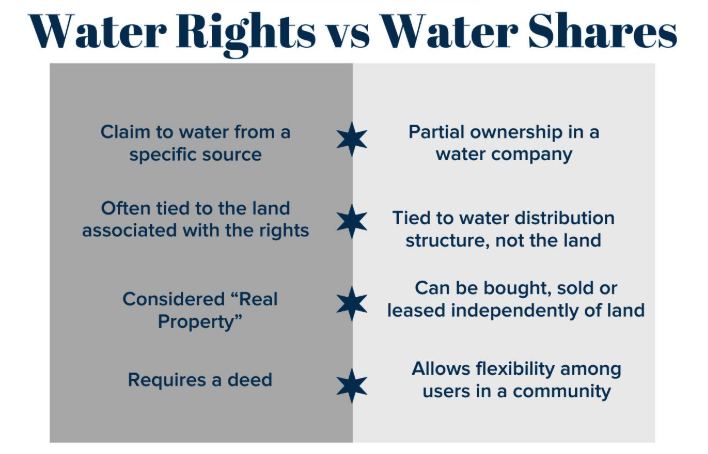
Water rights are legal entitlements that govern the use of surface water (rivers, streams, lakes) and groundwater for agricultural, domestic, industrial, or other purposes. Importantly, ownership of land does not automatically confer ownership of the water associated with it. Instead, water rights are separate property interests that may be appurtenant to the land or held independently.
In the United States, two dominant doctrines govern surface water rights:
Groundwater rights often follow a separate but related framework, with many states now imposing pumping limits, metering requirements, or conjunctive management rules to prevent long-term depletion.
Why Water Rights Are Essential in Agricultural Land Transactions
Water availability and legal security directly influence nearly every aspect of agricultural productivity:
In an era of increasing water scarcity driven by population growth, climate variability, and competing demands from urban and environmental uses, properties with senior, quantified, or otherwise secure water rights command substantial premiums. Conversely, land with uncertain, junior, or over-appropriated rights often sells at a discount—or proves difficult to finance.
Legal and Regulatory Framework
Water rights are primarily governed by state law, with federal involvement limited to interstate streams, navigable waters, environmental compliance (e.g., Clean Water Act, Endangered Species Act), and certain tribal reserved rights.
Key considerations include:
Due diligence must verify that existing rights are in good standing, free of forfeiture risk, and transferable to the buyer.
The Role of Specialized Expertise: eXp Land and Ranch Division
Recognizing the complexity of rural property transactions, eXp Realty established the eXp Land and Ranch Division to provide targeted support for agricultural, ranch, recreational, and undeveloped land sales. Agents within this division receive advanced training, access specialized tools (including GIS-based mapping platforms such as Land ID), and participate in ongoing education focused on land-specific issues—including water rights evaluation, zoning, easements, mineral rights, and conservation programs.
This specialized knowledge enables eXp Land and Ranch agents to:
Practical Steps for Evaluating Water Rights Prior to Purchase
A thorough evaluation typically includes the following steps:
Common Challenges and Risk Mitigation Strategies
Buyers frequently encounter:
Mitigation requires early identification, expert consultation, and realistic contingency planning—often including backup water sources, conservation improvements, or participation in water markets.
Looking Ahead: Evolving Water Policy and Technology
Water management in agriculture is undergoing rapid change. Key trends include:
Agents within the eXp Land and Ranch Division remain current on these developments through continuing education and industry networks, enabling them to advise clients on forward-looking strategies.
Conclusion
Water rights are not a peripheral concern—they are foundational to the long-term success of any agricultural land investment. A property with strong, reliable water rights can deliver consistent production and appreciate in value, while one with uncertain or insufficient rights may become a financial burden.
For buyers seeking to navigate this complex landscape with confidence, partnering with professionals who understand both the legal intricacies and the practical realities of rural land is essential. The eXp Land and Ranch Division offers precisely this combination of specialized expertise, advanced tools, and transaction experience.
Before making your next agricultural land purchase, ensure water rights receive the scrutiny they deserve. The right guidance today can secure productive fields and sustainable operations for decades to come.
Frequently Asked Questions
1. How can the eXp Land and Ranch Division assist specifically with water rights due diligence?
Agents in the division are trained to interpret water rights documentation, utilize advanced mapping tools to visualize water features and irrigated areas, and coordinate seamlessly with water attorneys and technical specialists to identify and address potential issues before closing.
2. Do properties with senior or secure water rights command higher prices?
Yes. Reliable, senior-priority water rights significantly reduce production risk and increase yield potential, making such properties more attractive to buyers and lenders. This often translates into higher market values compared to similar parcels with junior or uncertain rights.
3. What happens in states that apply elements of both riparian and prior appropriation doctrines?
In transitional or hybrid jurisdictions, the applicable rules depend on the specific water source and historical use. An experienced land professional or water rights attorney familiar with local law is essential to clarify which doctrine governs and how rights are administered.
4. Can water rights status affect the availability or terms of financing?
Lenders underwriting agricultural loans place substantial weight on water security. Properties with well-documented, senior rights generally qualify for more favorable terms, while uncertain or junior rights may result in higher interest rates, reduced loan-to-value ratios, or outright financing challenges.
5. How frequently should water rights be reviewed after purchase?
It is prudent to review water rights status annually, particularly in drought-prone regions or basins undergoing adjudication or regulatory change. Ongoing consultation with legal and brokerage professionals helps ensure continued compliance and optimal use of available water resources.

If you're in the market for a home, you can trust the experienced professionals at eXp Realty of California. We are dedicated to providing superior service and expertise to help you achieve your real ....
Short sales, South Placer market trends, mortgage rates, ranch property and three featured homes.ALEX DYER | REAL ESTATEPLACER & SACRAMENTO COUNTIES · SEPTEMBER 24, 2026This week's market
Sacramento Housing Market • Distressed Property ReportSacramento Short Sales Are Rising in 2026 — Here’s What the Numbers Really ShowShort sales are showing up again nationally and
Weekly Market Report · South Placer CountyRoseville, Rocklin & Lincoln Real Estate Market ReportWeek of September 17 – 23, 2026 · Prepared by Alex Dyer, Your
Living in Placer CountySearch land and ranch listings Book a callLand & Ranch Guide, September 2026How Much Acreage Do You Need? Sizing Your Dream Ranch PropertyStart with the life you want, not
Additional:
915 Highland Pointe Dr. Ste 250Should you require assistance in navigating our website or searching for real estate, please contact our offices at 916-318-3487.
CA License # 01239383

 All measurements and all calculations of area are approximate. Information provided by Seller/Other sources, not verified by Broker. All interested persons should independently verify accuracy of information. Provided properties may or may not be listed by the office/agent presenting the information. Data maintained by MetroList© may not reflect all real estate activity in the market.
All real estate content on this site is subject to the Federal Fair Housing Act of 1968, as amended, which makes it illegal to advertise any preference, limitation or discrimination because of race, color, religion, sex, handicap, family status or national origin or an intention to make any such preference, limitation or discrimination.
MetroList CA data last updated: September 26, 2026 5:32 AM UTC Terms of Use.
Vendor data provided by Inside Real Estate, LLC.
All measurements and all calculations of area are approximate. Information provided by Seller/Other sources, not verified by Broker. All interested persons should independently verify accuracy of information. Provided properties may or may not be listed by the office/agent presenting the information. Data maintained by MetroList© may not reflect all real estate activity in the market.
All real estate content on this site is subject to the Federal Fair Housing Act of 1968, as amended, which makes it illegal to advertise any preference, limitation or discrimination because of race, color, religion, sex, handicap, family status or national origin or an intention to make any such preference, limitation or discrimination.
MetroList CA data last updated: September 26, 2026 5:32 AM UTC Terms of Use.
Vendor data provided by Inside Real Estate, LLC.
